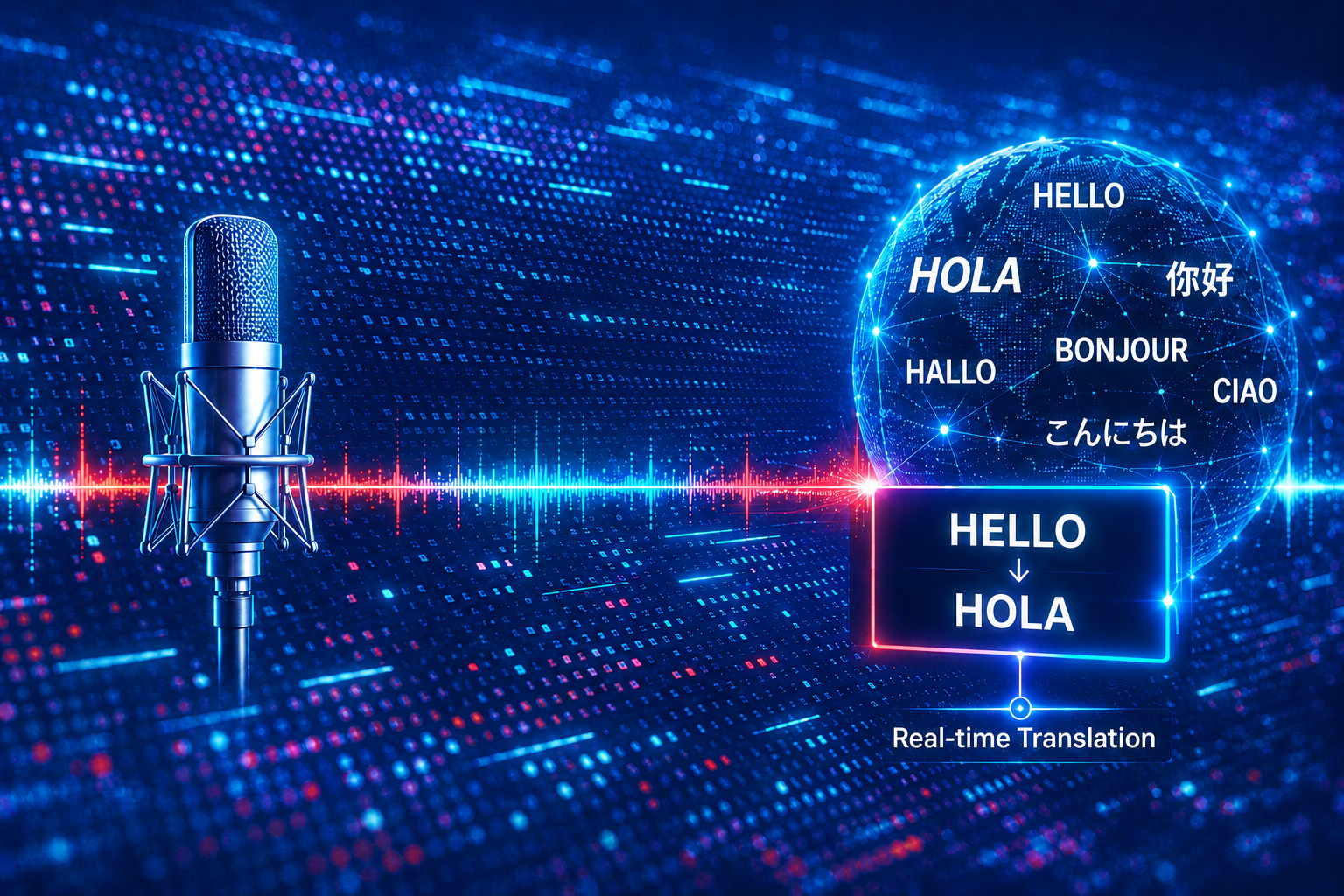
Real-Time Translation Solutions for Events

AI translation for events, conferences, streaming and hybrid productions.


Multilingual live translation solutions designed for live event workflows, audience displays, streaming productions and international events.

Real-Time Translation Solutions for:

  • Conferences

  • Corporate events

  • Hybrid events

  • Live streaming

  • Webinars

  • Accessibility relay screens

  • Panel discussions

  • Live productions

Designed to support multilingual and inclusive live events.
Delivering real-time AI translation for conferences, streaming productions, webinars and hybrid events.
Low-latency browser-based translation workflows designed specifically for live production environments.

Built by event professionals, for event professionals.

We capture live audio and process speech in real time using AI-driven speech recognition and translation technology.

Translated output can be displayed on relay screens, confidence monitors, streaming overlays and audience-facing displays, with fully customisable layouts including font size, colour, positioning and fullscreen operation.

Designed specifically for live events, conferences and broadcast workflows, the platform supports browser-based operation and scalable multilingual event deployment.

Live Translation Demo
AI Speech Recognition (ASR)

Live Translation Solutions For:

  • Conferences
  • Corporate events
  • Hybrid events
  • Webinars
  • Live streaming
  • Accessibility relay screens
  • Panel discussions
  • Public sector events
  • Broadcast workflows

Our Clients

List of companies WVS TLD works with

What makes your live translation platform different from standard AI translation tools?

Our platform was designed specifically for live events, streaming and broadcast environments – not document translation or meeting transcription workflows.

The system focuses on low-latency multilingual translation delivery, audience display workflows and production-friendly output control designed for real-world live event operations.

Can translated text be displayed on relay screens or audience displays?

Yes. The platform supports multilingual relay screen and audience display workflows, allowing translated text to be shown for international audiences, presenters and live production environments.

The output can be customised with adjustable font size, colour, positioning and fullscreen display modes.

Does the platform support live streaming and hybrid events?

Yes. The system is designed for live streaming, hybrid events and broadcast workflows.

Translated output can be integrated into streaming productions, audience screens and browser-based display environments for multilingual live events.

Is the platform browser-based?

Yes. The system operates through a browser-based control interface, reducing the need for complex local software installations and allowing rapid deployment for live events and temporary event environments.

Can the translated output be customised?

Yes. The translated output is fully customisable for different production scenarios.

Operators can control:

  • Font size
  • Colours
  • Screen position
  • Display width
  • Fullscreen layouts
  • Multiple output modes including Live, Scroll and Clean views

Is the platform suitable for multilingual and international events?

Yes. The platform is designed to support multilingual and inclusive event delivery by providing real-time translated text for audiences, relay screens and streaming outputs.

It is suitable for conferences, webinars, hybrid events and public-facing productions where multilingual audience access is required.

What types of events is the platform designed for?

The platform is designed for:

  • International conferences
  • Corporate events
  • Hybrid events
  • Live streaming productions
  • Webinars
  • Panel discussions
  • Public sector events
  • Broadcast workflows
  • Multilingual audience displays

Was the platform designed specifically for live event workflows?

Yes. The platform was built by live event professionals and designed around real production requirements including low-latency operation, scalable deployment, browser-based management and operator-controlled outputs.

Unlike generic AI translation tools, the system focuses on practical live event integration and multilingual production usability.